Weedipedia
Prohibited Noxious Weeds
Means a plant designated in accordance with the Weed Control Act regulations as a prohibited noxious weed and includes the plant’s seeds. This weed designation can be seen as regulatory support for an “Early Detection, Rapid Response” stage of invasive plant management. Plants in this category are either not currently found in Alberta or are found in few locations such that eradication could be possible. Under the Weed Control Act a person has a responsibility to destroy a prohibited noxious weed.
Noxious Weeds
Means a plant designated in accordance with the Weed Control Act regulations as a noxious weed and includes the plant’s seeds. This weed designation can be seen as regulatory support for a “containment” stage of invasive plant management. Plants listed in this category are considered too widely distributed to eradicate. Local authorities shall conduct control programs for these weeds as they have significant ecological or economic impact on lands within their municipality.
Nuisance Weeds
Nuisance weeds are not classified by the weed control act and while they are not aesthetically pleasing they are easily controlled. You cannot be issued a weed control notice for nuisance weeds, but may want to control them for site cleanliness.
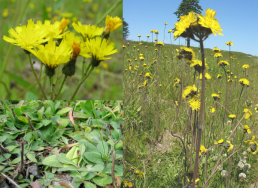
Meadow Hawkweed (Hieracium caespitosum) - Prohibited Noxious
Meadow Hawkweed is perennial that does not require sexual reproduction to produce seeds, so it quickly spreads and can form dense stands. It has a cluster of yellow flower heads with notched petal tips and black hairs on the bracts. Leaves form basal rosettes and are narrow and hairy. Stems are mostly leafless, covered in short hairs, and can grow to 90cm tall. Roots are shallow allowing for stolons and rhizomes to produce more plants easily. Seeds are tiny and black.
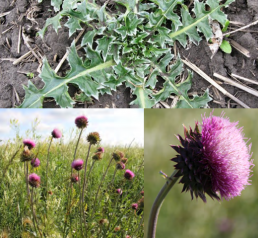
Nodding Thistle (Carduus nutans) - Prohibited Noxious
Nodding Thistle is a biennial that is common in rangeland areas. It has large purple flower heads with thorny bracts. Leaves are alternately arranged with deep wavy and spiny edges, long white mid vein, and can be hairy. They can grow to 2.5m tall with hairy stems containing long spines. Seeds have large tufts for easy dispersal. lack.
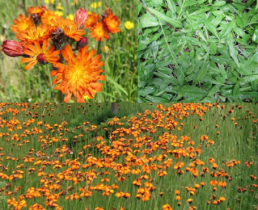
Orange Hawkweed (Hieracium aurantiacum) - Prohibited Noxious
Orange Hawkweed is a perennial that is highly invasive and quickly spreads to form dense stands. It has a cluster of orange flower heads with notched petal tips and black hairs on the bracts. Leaves form basal rosettes and are narrow and hairy. Stems are mostly leafless, covered in short hairs, and can grow to 90cm tall. Roots are shallow allowing for stolons and rhizomes to produce more plants easily. Seeds are tiny and black.
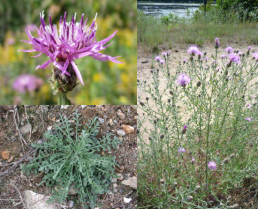
Spotted Knapweed (Centaurea stoebe) - Prohibited Noxious
Spotted Knapweed is a perennial that is tolerant of a vast range of habitats. It has a single pinkish-purple flower head per branch with bracts containing a dark spot on the tips. Rosette leaves are long, deeply lobed, and grayish green, while stem leaves are finer, alternately arranged, and can taste bitter. It can grow to 120cm tall and has a highly branched stem. Root system is a taproot and seeds are long and black.
Canada Thistle (Cirsium arvense) - Noxious
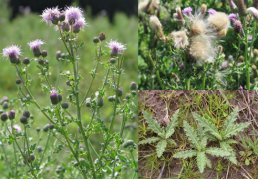
Canada Thistle is a creeping perennial that is found throughout Alberta and common in roadside ditches, overgrazed pastures, and disturbed soils. It has clustered purple, pink, or white flower heads at branch ends. Leaves are alternately arranged and have wavy edges with spine tips. It can grow up to 120cm tall with ridged, spiny/hairy stems. Roots may be deep and can be horizontal or vertically creeping. Seeds are flat and long with white tufts.
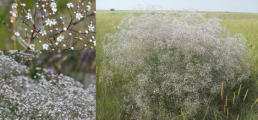
Common Baby’s Breath (Gypsophila paniculate) - Noxious
Common Baby’s Breath is a perennial that can be found in roadside ditches and pastures. It has multiple white flowers that contain five petals and have a sweet scent. Leaves are oppositely arranged, long, narrow, and have a prominent mid vein. It can grow up to 100cm tall with multiple branches that can form bush like plants. Roots are woody, drought tolerant, and can grow to great depths. It can produce thousands of seeds that are small, black, and kidney shaped.
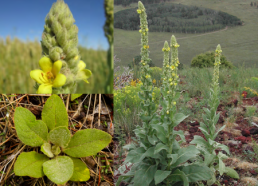
Common Mullein (Verbascum thapsus) - Noxious
Common Mullein is a biennial, perennial, or rarely an annual that is found in disturbed areas and along roadways. It has a dense spike of yellow flowers that have five petals. Leaves are oppositely arranged, large, woolly, and get smaller going up the stem. They can grow up to 2.5m tall with a woolly stem. Roots are deep taproots. It can produce hundreds of thousands small seeds in hairy capsules that have long term viability (up to 100 years).
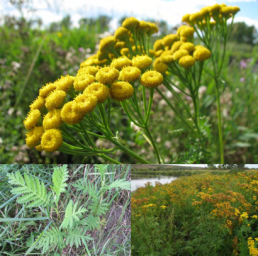
Common Tansy (Tanacetum vulgare) - Noxious
Common Tansy is a perennial that is popular in roadside ditches and riparian areas. It has several clusters of yellow-orange flower heads that have a button like shape. Leaves are alternately arranged and contain leaflets with toothed edges. It can grow up to 180cm tall with a stiff woody stem that is purplish-red in colour. Roots are rhizomatous. It can produce up to 50, 000 seeds that are yellowish-brown.
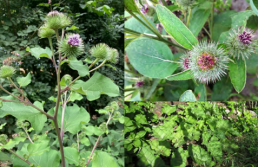
Greater Burdock (Arctium lappa) and Lesser Burdock (Arctium minus) - Noxious
Greater and Lesser Burdock are biennial and are found in disturbed areas. They have clusters of purple/pink flower heads with hooked bracts that act like Velcro. Leaves are alternately arranged, heart shaped, wooly underneath, and reduce in size up the stem. They can grow from 1-3m tall with thick stems that are hollow, branched, grooved (or possibly angular for Lesser Burdock), and slightly hairy. They have large seed pots with thousands of seeds that can attach to clothing/fur with hooks.
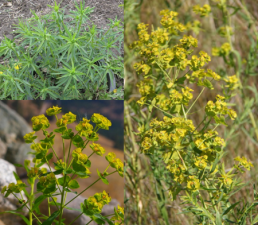
Leafy Spurge (Euphorbia esula) - Noxious
Leafy Spurge is a creeping perennial that is commonly found in pastures, parks, and river valleys. It has tiny yellowish-green clusters of flowers that lack petals and have two showy yellow heart-shaped bracts. Leaves are alternately arranged, long, narrow, and contain milky white sap. It can grow up to 90cm tall and has a smooth pale green stem that contains white milky sap. This sap can be an irritant to livestock and cause skin irritation in humans. Roots are deep, brownish with pink buds, and spreads with rhizomes. They produce seed capsules that are oblong, grayish to purple, and contain up three seeds.
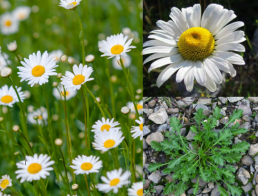
Oxeye Daisy (Leucanthemum vulgare) - Noxious
Oxeye Daisy is a perennial and that is often found along roadside and in open areas. They have a single white petalled with yellow center flower head per stem. Leaves are variable and alternate with variation between upper and lower stem. Lower and basal leaves are long, narrow, spoon-shaped, with rounded teeth. Upper leaves are smaller and have no stalk. They can grow to 80cm tall with numerous smooth stems coming from the base. Roots are shallow with branched rhizomes. Seeds are small and black with ribs.
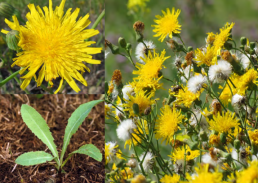
Perennial Sow Thistle (Sonchus arvensis) - Noxious
Perennial Sow Thistle is a creeping perennial that is tolerant of many different habitats and can be a serious issue in riparian areas and wetlands. It has loose clusters of yellow flower head with green bracts that have sticky hairs. Leaves are alternately arranged with prickles on the edges. It can grow to 1.5m tall from a hollow stem that produces milky sap when snapped. Roots are creeping rhizomatous, fragile, and can grow 3m deep. It can produce thousands of seeds that are small with white tufts.
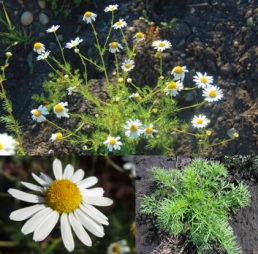
Scentless Chamomile (Tripleurospermum perforatum) - Noxious
Scentless Chamomile is an annual, biennial, or a short-lived perennial that can grow in a wide range of conditions. It has a daisy-like flower (white petals around a yellow center). Leaves are fern-like, highly branched, and alternately arranged. It can grow up to 100cm tall from highly branched stems. Roots are fibrous. It is considered a prolific seed producer.
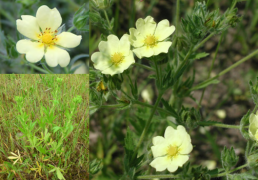
Sulphur Cinquefoil (Potentilla recta) - Noxious
Sulphur Cinquefoil is an annual, biennial, or perennial that has been documented to be 20 years old in areas of long-term infestation. It has a flower head with five light yellow petals (deeper yellow at center) with deeply notched tips. Leaves are palmately compound with 5-7 toothed leaflets that decrease in size up the stem and have a green underside (not silver like native species). It can grow up to 60cm tall from one or several hairy stems. Roots are fibrous and spreading. It produces brownish-purple comma shaped seeds that have net-like ridges.
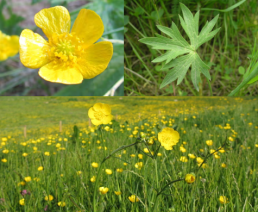
Tall Buttercup (Ranunculus acris) - Noxious
Tall Buttercup is a creeping perennial and is common in overgrazed pastures and moist open areas. It has glossy yellow flower heads with five petals with a greenish center. Leaves decrease in size moving up the stem and are deeply lobed with 3-5 segments that are hairy and lobed. It can grow up to 100cm tall from thin stems that branches in the upper portions and can be hairy. Roots are hairy, fibrous, and rhizomatous. It produces small black-brown seeds in clusters that have hooks that can attach to clothes/fur.
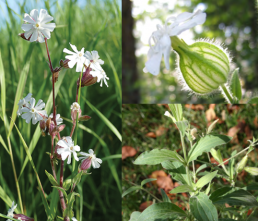
White Cockle (Silene latifolia subsp. alba) - Noxious
White Cockle is an annual, biennial, or short-lived perennial that is often found in pastures and cropland. It has a fragrant, white flower head with either 5-10 veined calyx (male plants) or 20 veined calyx (female plant). Leaves are oppositely arranged, oblong, stalked in lower leaves, stalkless in upper leaves, and covered in sticky hairs. It can grow up to 120cm tall from a hairy stem that is branched with swollen nodes. Rooting occurs with a deep taproot. It can produce up 25, 000 seeds that are small, gray, and kidney shaped.
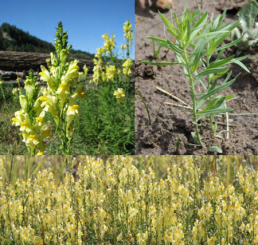
Yellow Toadflax (Linaria vulgaris) - Noxious
Yellow Toadflax is a perennial and is tolerant of a wide range of conditions allowing it to create large colonies in rangeland and roadside ditches. It has snapdragon-like flowers that are yellow with an orange throat and clustered at the top of the stem. Leaves are alternately arranged, pale green, long and narrow, smooth edged, slightly rubbery, and small ones are present between the stem and main leaves. It can grow to 100cm tall and usually has a single or multiple unbranched stems. Roots have creeping rhizomes. Seeds are dark brown-black, oval, flattened, with a circular wing and are contained in two compartments.
Nuisance Weeds
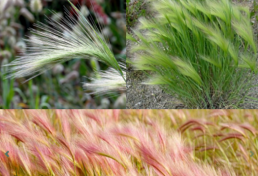
Foxtail Barley (Hordeum jubatum) - Nuisance
Foxtail Barley is a perennial that can be found in rangeland, crop fields, and ditches. It has a dense, long-awned spike, which can be green or purplish and nods to one side. Leaves are leaf sheaths that are split and hairy. It can grow up to 100cm tall with a smooth erect stem. Roots are fibrous and is a prolific seed produce with seeds that are yellow with long awns.
Hemp Nettle (Galeopsis tetrahit) - Nuisance
Hemp Nettle is an annual that is often found in disturbed soil and crop fields. It has whorled clusters of small irregularly tubular pink to white flowers that each have a spiny calyx. Leaves are oppositely arranged, long, pointy, hairy, and have serrated edges. It can grow up to 100cm tall with a stem that is square, hairy, swollen below the nodes, and erect. It can produce four teardrop shaped dark seeds per flower.

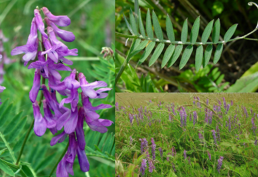
Tufted Vetch (Vicia cracca) - Nuisance
Tufted Vetch is a perennial that grows in disturbed areas, fields, and ditches. It has one-sided racemes of 10-40 purple pea-flower shaped flowers. Leaves are pinnate with 8-12 pairs of long narrow leaflets. It has a climbing stem that can be up to 2m long and uses tendrils on the ends of the leaves to secure to other plants/surfaces. Rooting occurs with a long white taproot. It can produce thousands of seeds through seed pods that contain multiple seeds.
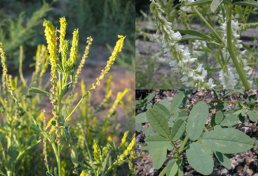
White and Yellow Sweet Clover (Melilotus albus & Melilotus officinalis) - Nuisance
White and Yellow Sweet Clover are biennial that are common in disturbed areas, ditches, and pastures. They have multiple yellow or white pea-flower shaped flowers (tubular and floppy). Leaves are alternately arranged, compound, trifoliate, and decrease in presence higher up the stem. It can grow up to 2.5m tall with smooth ridged branched stems. Roots are large deep taproots. They produce one or two seeds per pod in each flower that are either olive green/purple (yellow sweet clover) or yellow (white sweet clover).
Yellow Salsify (Tragopogon dubius) - Nuisance
Yellow Salsify (aka Western Goatsbeard) is a biennial or short-lived perennial that is found in rangeland, crop fields, and disturbed areas. It has a flower with a ray arrangement with long outer yellow petals, smaller center petals, and long narrow bracts that are on top of an inflated peduncle. Leaves are long, grass-like, and clasping at the base. It can grow to up 100cm tall with a smooth, hollow stem that contain a milky sap. Rooting occurs with thick and deep taproots. It produces large fluffy seed heads with multiple narrow seeds with feathery tufts.
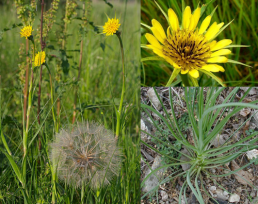
Photo Credit: AAAF, Allison Jasper, Andre Karwath, B. Stewart, Evgeniya Vlasova, Gardenia, Glen Mittelhauser, Government of Manitoba, Ian Morrison, iNaturalist, John Hilty, King County, Lakeside Leader, Lee Schofield, Leslie J. Mehrhoff, MAFRI, Manitoba Master Gardener Association, Max Licher, Michigan State University, Missouristate.edu, MyGarden.org, Native Plant Trust, Northern BushCraft, Ohio State Weed Lab, Patricia O’Neil, Patrick Alexander, Trevor James, Wheatland County (AB), & Whiteway.
Why Choose Backwoods Resources

Technology
Advanced field technology, onsite data control, access tickets online.
Annual Plan Reviews
Includes vegetation identification, control measures and long term plan.
Certified
Certified AB, BC, and SK pesticide applicators